
Century Aluminum Sale to TeraWulf Brings New Data Center Plans to Hancock County
By Chelsea Boling
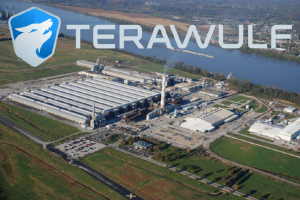
Plans to redevelop the former Century Aluminum site into a data center campus are now moving forward following the sale of the Hawesville property earlier this week. As details emerge about the project, county officials say they are focused on ensuring residents have opportunities to learn more, ask questions, and understand what the development could mean for Hancock County.
According to a filing with the Securities Exchange Commission (SEC), on February 2, 2026, Century Aluminum of Kentucky General Partnership (CAKY), a wholly owned subsidiary of Century Aluminum Company, completed the sale of approximately 750 acres at 1627 State Route 3543 in Hawesville to Justified DataPower LLC, a company affiliated with TeraWulf Inc. The transaction includes $200 million in cash and a 6.8% non-dilutive minority equity interest in Raylan Data Holdings LLC, which plans to redevelop the site into a digital infrastructure campus.
Local officials say they learned of the buyer only shortly before the sale was finalized.
“This was a private sale,” said Hancock County Judge/Executive Johnny “Chic” Roberts. “We didn’t recruit this company, and we weren’t part of the conversations about who might purchase the property.”
For many residents, frustration with Century runs deep. The company announced the idling of the smelter in the summer of 2022, resulting in the loss of more than 600 jobs and a significant hit to county finances.
“That shutdown affected families, livelihoods, and our fiscal court,” Roberts said. “We saw about a 22% drop in occupational tax revenue.”
Mike Baker, Director of Economic Development for the Hancock County Industrial Foundation, said county leaders initially focused on trying to bring the smelter back online.
“Our first objective after the smelter shut down was the possibility of restarting it,” Baker said. “The loss of nearly 680 jobs was a big hit for Hancock County, and we worked with Century to see if part or all of the smelter could be brought back online.”
Roberts said the county repeatedly raised the possibility of Century restarting operations, including offering help pursuing federal funding about ten months ago, but was told business conditions did not justify reopening.
“We wanted those jobs back,” Roberts said. “That wasn’t the direction they wanted to go.”
Instead, Century moved forward with repurposing the property, a decision that has left many residents wary of the new use.
Baker also addressed questions about whether the sale could have been stopped.
“Century owned the property, and they made the business decision to sell it,” Baker said. “We were not at the table and we weren’t part of the negotiations. There was no rezoning required — that site has been heavy industry for more than 50 years and is zoned for that type of use.”
Information from TeraWulf
According to Kerri Langlais, Chief Strategy Officer at TeraWulf, the Hawesville site will be redeveloped into a digital infrastructure campus supporting high-performance computing, including artificial intelligence and advanced data processing.
“Development will occur in phases across the existing industrial footprint,” Langlais said. “Long term, the property will remain dedicated to large-scale computing and supporting infrastructure.”
The redevelopment will focus on high-performance computing rather than cryptocurrency mining, a sector frequently criticized for extreme power demand and minimal employment impact.
She emphasized that the site’s size and industrial layout allow it to adapt over time without expanding beyond the property or disturbing new land, adding that redevelopment includes removal of the old smelter infrastructure, including the stack, and full environmental remediation.
Site preparation is already underway, with initial operations targeted for the second half of 2027, pending permitting and sequencing.
“Over the multi-year buildout, the project is expected to generate hundreds of construction jobs,” Langlais said.
At full operation, the campus is expected to support approximately one hundred full-time jobs, with additional employment through vendors and service providers.
“These roles will include technicians, electricians, maintenance staff, security, facilities management, and operations support,” she said. “We intend to prioritize local hiring and will host career events as development progresses.”
Baker acknowledged the job numbers will not match what Century once provided but said new employment is still meaningful.
“We all wanted something that would bring back the number of jobs Century had,” Baker said. “But if it’s one hundred jobs, that’s still more than an empty smelter creating zero.”
Power, Water, and Infrastructure Concerns
Power usage remains one of the community’s biggest concerns, particularly given Century’s past statements that rising power costs contributed to the smelter’s closure.
Langlais said the data center will rely on the same industrial-scale power infrastructure originally built for the smelter.
“At full build-out, the facility is not expected to exceed the historical power demand of the former smelter,” she said. “This is a reuse of existing infrastructure, not a new or incremental load on the local grid.”
Baker noted that the existing power system is one of the site’s major assets.
“The smelter used roughly 450 to 480 megawatts of power, and that infrastructure is still there,” he said. “That’s a big reason the site was attractive for this type of development.”
Langlais added that power will not be diverted from homes or businesses and that any needed improvements would be paid for by the project.
Water usage has also been a concern among residents. Langlais said the campus will use closed-loop cooling systems.
“There is an initial fill, but water is reused continuously during operations,” she said. “There is no routine withdrawal or discharge, and ongoing water use is minimal.”
County Leaders Request Clarification on Key Impacts
As development plans take shape, local officials say they are focused on obtaining clear information about utilities, employment, and long-term economic effects.
“We want numbers on water usage, power usage, capital investment, and tax revenue,” Roberts said. He emphasized that the county will not subsidize the project’s utility costs. “We are not interested in subsidizing electricity on the backs of our ratepayers,” Roberts said.
He also addressed community frustration about transparency. “We just learned who the buyer was very recently,” Roberts said. “We don’t own the property and we didn’t recruit this company, but we live here too. We want the same assurances the public wants. We want our kids to grow up here, stay here, and raise their families here.”
Upcoming Public Events
For residents seeking more information, two public events have been scheduled:
• Community Informational Event — Tuesday, Feb. 24, from 6–7:30 p.m. at the North Hancock Elementary School Gym
• Local Hiring Event with Green River Area Development District (GRADD) — Wednesday, Feb. 25, from 10 a.m.–2 p.m. at the Hancock County Career Center
The informational meeting will allow residents to ask questions and voice concerns, while the hiring event will focus on potential employment opportunities tied to the project.
Looking Ahead
Langlais said TeraWulf views the project as a long-term investment in Hancock County. “This converts a legacy industrial site into a modern use that creates skilled jobs, strengthens the tax base, cleans up historic infrastructure, and reuses existing assets,” she said.
For many Hancock County residents, trust will depend on transparency and whether commitments made now translate into long term benefits for this community.

Thank you for the clarifications!