KY Representatives split on $2,000 payment vote
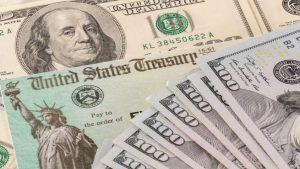
Kentucky Representatives are split on the $2,000 direct payments to Americans making less than $75,000 adjusted gross income, with two state Republicans voting for it, one not voting, one Democrat voting for it, and two Republicans voting against it, including Brett Guthrie, who represents the 2nd District, which includes Hancock County.
After Congress passed a $2.3 trillion omnibus spending bill last week, President Donald Trump threatened to veto it and said the $600 direct payments included in the bill were too small and should be $2,000. On December 27 he signed the bill into law anyway, but Democrats in the House, as well as some Republicans, voted on a separate bill the next day to amend the $600 up to $2,000. That bill, called the Caring for Americans with Supplemental Help (CASH) Act, passed the House 275-134, with 21 not voting.
For Kentucky’s representatives, Republican Andy Barr didn’t vote, Republican James Comer voted yes, Guthrie voted no, Republican Thomas Massie voted no, Republican Harold Rogers voted yes, and Democrat John Yarmuth voted yes.
The omnibus spending bill, officially called the Consolidated Appropriations Act, 2021, combines budgets for dozens of segments of government into one place, which lead to a bill that, at 5,593 pages, is the longest bill ever passed by Congress. And the $2.3 trillion total is also one of the largest spending bills ever passed.
Republicans, typically loathe to big spending, wanted to keep COVID-19 relief spending to below $1 trillion, got a total of $900 billion in the omnibus bill, and adding more to give each American $2,000 would add around $464 billion.
The CASH Act was sent to the Senate, where on Tuesday Republican Majority Leader Mitch McConnell blocked any vote on the bill despite a request by Minority Leader Chuck Schumer and despite pressure from growing support from Senate Republicans, namely Kelly Loeffler and David Perdue, who are facing tight runoffs in Georgia next week.
After blocking a vote on the CASH Act, McConnell introduced his own bill, which includes the $2,000 direct payments that Trump wanted, but also includes two other things on Trump’s wish list: the repeal of Section 230 and the formation of a committee to study voter fraud.
Section 230 is the part of the Communications Decency Act that protects media companies like Facebook from liability for what users post on their platforms.
Since the $600 is already included in the bill that’s now law most Americans should expect checks imminently, but the remaining $1,400 now rests in the hands of Democrats, most of whom don’t want to repeal Section 230 or study voter fraud, and Republicans, many of whom either don’t want to spend that much or oppose the payments all together.
By Dave Taylor