Kentucky General Assembly approved the second half of KY’s 24-month spending plan
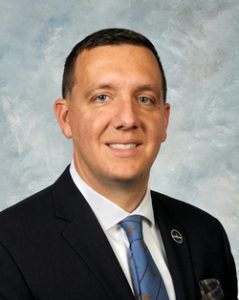
Senator Matt Castlen
SENATOR MATT CASTLEN’S LEGISLATIVE UPDATE
This week’s 30-day Regular Session activity ended with dozens of bills on the Governor’s desk. Having already completed 28 legislative days, both the House and the Senate raced to approve bills through the process until the figurative and literal eleventh hour.
This week marked the beginning of the veto recess, which means Tuesday, March 16, was the last day lawmakers could pass bills and still have the opportunity to override any gubernatorial vetoes before the final day of the legislative session. The Governor has ten days to sign a bill, let it become law without his signature, or veto it.
The Kentucky General Assembly approved the second half of the state’s 24-month spending plan this week after uncertainties from COVID-19 cut budget negotiations short nearly a year ago. In House Bill (HB) 192, the executive budget is as a near continuation budget from the previous fiscal year with necessary modifications. In addition to making structural changes that would ensure the road fund was spent on roads, the executive budget would put $134 million into the rainy day fund this year and another $609 million next year. The executive budget also includes a two percent increase in higher education funding through a performance-based model, targeted raises for crime lab technicians, and money for the coroner’s office. This budget also addresses Kentucky’s severely outdated unemployment insurance system.
This budget’s spending plan would also return the tax revenue from mining coal to coal-producing counties at record percentages.
Senate changes to the budget’s accompanying revenue measure, known as HB 249, would allow the motor vehicle commission to charge new fees, expand the film industry tax credit, increase the cap on the historic preservation tax credit, allow a one-year property tax exemption for veterans service organizations, and deal with an emergency disaster relief account within the road fund.
We are maintaining a careful and conservative approach as we continue to navigate the pandemic’s uncertainty. The state has received a lot of one-time dollars from the federal government through the Coronavirus Aid, Relief, and Economic Security (CARES) Act and the most recent federal stimulus package.
Due to these injections of federal funds into our society’s various sectors, the economic outlook and state revenue may be artificially inflated. There is no sure way of knowing what state revenues or the economy will look like once there is no stimulus money helping to prop things up. It would be financially irresponsible for the state to use one-time dollars to put Kentucky taxpayers on the hook for recurring expenses in future years when we will not lean on federal funds.
An essential aspect of the budget is it maintains legislative authority on the allocation of funds, as required by the Constitution of Kentucky. The budget bill stipulates that the General Assembly must authorize the use of these monies. Thirty-seven million in federal dollars has been designated to provide grants to detect, diagnose, trace, and monitor COVID-19 infections in congregate and vulnerable population settings.
Additionally, $10 million in state dollars will go to the School Facilities Construction Commission for schools recently damaged by flooding. A critical element in the economic growth of our state is people’s access to reliable internet services. Reliable broadband can be the difference in companies determining to locate into our communities. With the reliance on virtual learning for our students this past year, we have seen how a lack of access to internet services only exacerbates Kentucky students’ struggles.
Furthermore, as COVID-19 forced us to rely on more virtual services, we have seen growth in telehealth services. Bringing internet access to the areas currently without it can help our economy, education, and even improve health outcomes.
Legislature passed House Bill (HB) 320, allocating $250 million of federal money to expand access to broadband connectivity. However, the bill stipulates that no more than $50 million can be spent before April of next year to make sure efforts are deliberate, effective, and will go to the areas of most need. This initial $50 million will get the ball rolling. Legislators will return to session next January to provide ample opportunity to assess the efforts made between now and then to determine the best path forward. The funding will be targeted to utilize existing infrastructure and the experienced workforce through electric co-ops. In reality, the allocated funds will equate to $500 million because the $250 million will be used as matching funds for the projects.
Other bills that have made final passage and will qualify for a veto override should the Governor veto them include:
HB 95 aims to help Kentuckians struggling with diabetes by capping the cost of out-of-pocket insulin at $30 for a 30-day supply. It applies to state-regulated, comprehensive, private health insurance plans and the Kentucky employee health plan. It does not apply to Medicare, Medicaid, or self-funded health plans.
For too long, the high cost of insulin has caused patients to ration their supplies, resulting in a loss of life. Others have had to make desperate financial decisions to maintain their access to their insulin. Kentucky ranks eighth in the nation in diabetes prevalence and is the fifth-highest state in diabetes-related deaths. Between 2000 and 2018, the percentage of Kentuckians diagnosed with diabetes doubled. Diabetes can be associated with heart failure, stroke, blindness, and more.
Senate Bill (SB) 8 provides for opting out of mandatory vaccinations for people with religious or conscientiously held beliefs. The bill maintains employer immunization policies for employees of schools, universities, and health care organizations. SB 80 would strengthen the police decertification process in Kentucky by expanding the number of acts considered professional wrongdoing. A second provision would set up a system for an officer’s automatic decertification under certain circumstances. A final provision would prevent an officer from skirting decertification by resigning or retiring before an internal investigation is complete.
HB 273 named the Bailey Holt-Preston Cope Victims Privacy Act, would exclude from the open records act photographs or videos that depict a person’s death, killing, rape, sexual assault, or abuse. It is named in honor of Bailey Nicole Holt and Preston Ryan Cope, who were killed in the 2018 Marshall County High School shooting at the age of 15.
House Joint Resolution 77 extends specific COVID-19 regulations an additional 60 days. This joint resolution, which can carry the force of law, will be effective only if the court ultimately rules in favor of the legislature on pending litigation. The Governor is challenging HB 1 and SBs 1 and 2.
Those three bills, if upheld, provide the legislature a seat at the table as life-altering executive decisions are made. It is worth noting that Kentucky is the exception to the rule regarding executive authority during a state of emergency. The bills being challenged by the Governor would merely bring Kentucky more in line with other states in regards to oversight of executive authority during times like these.
HB 328 would re-establish the state’s regulatory authority for roadside billboards after a federal court ruling called the state’s prior regulations into question. One concern had been that Kentucky was at risk of losing as much as $70 million in federal transportation funding for not meeting a federal requirement concerning roadside billboards.
I am thankful for the privilege of representing Daviess, Hancock, and McLean counties in the Kentucky Senate, and I welcome constituent comments on issues of importance to you. You can call me toll-free at 1-800-372-7181 or email me at: [email protected]